
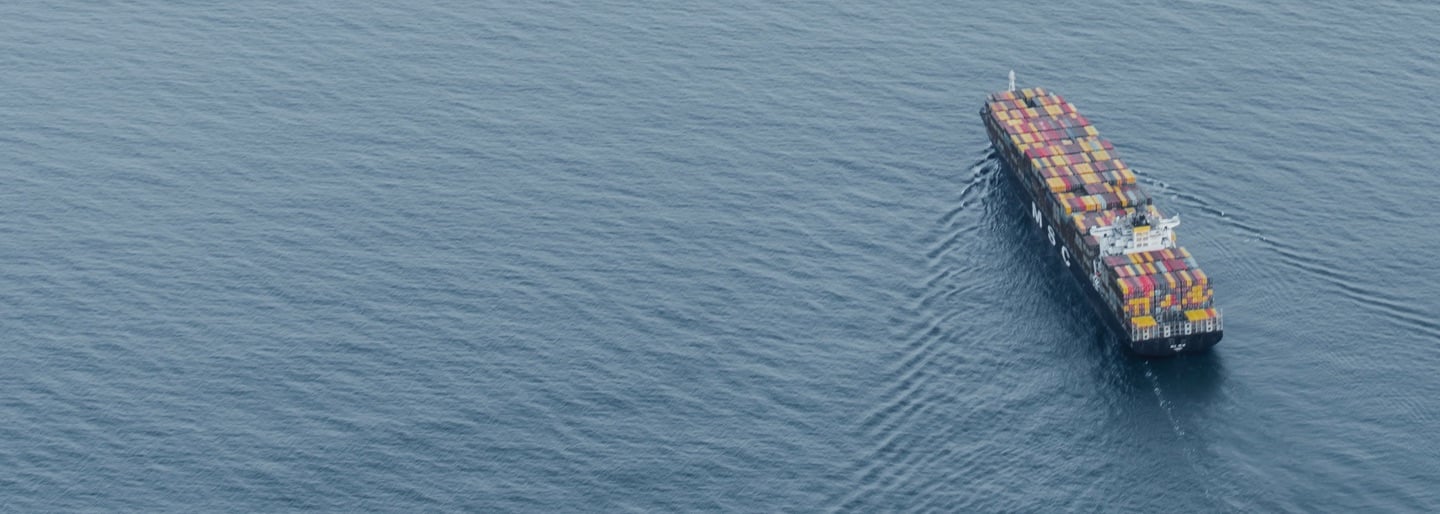
When you buy transportation through a freight forwarder, transport company, or courier, you are not fully covered should anything happen to your cargo during shipment — unless you buy separate transportation insurance. This catches a lot of people by surprise.
The natural assumption is that if you pay someone to transport your goods and they get damaged or lost, you'd be compensated for the full value. Unfortunately, that's not how it works.
What the carrier's liability actually covers
Freight forwarders and carriers do have liability for your goods — but it's limited. The limitations of liability create a balance where the carrier takes on enough risk to handle the goods properly, but not so much that a single accident could bankrupt them.
The standard compensation limits depend on the transport mode:
- Air freight: the highest per-kg liability, but still limited
- Road transport: moderate per-kg liability
- Sea freight: the lowest per-kg liability — quite a small amount per kilogram
A box of electronics weighing 10kg can have a very high value, yet the carrier's standard liability might only cover a fraction of it. For heavy, low-value goods the limitation may be sufficient. For light, high-value goods, it almost certainly isn't.
What transportation insurance covers
When you buy separate cargo insurance, you're covered for the full declared value of your goods. If something happens during transport — damage, loss, theft — you'll be compensated in full (minus any deductible). You can also be covered against general average, which is the maritime law principle where all cargo owners must share the cost if cargo is deliberately sacrificed to save a vessel.
The cost of cargo insurance is typically a small percentage of the goods' value — often well under 1%. For the peace of mind it provides, it's genuinely good value.
When do you need it?
The key question is: does the value of your goods significantly exceed what you'd get from the carrier's standard liability? If the answer is yes, you need insurance.
For very low-value, heavy goods — a shipment of bricks, for example — the carrier's per-kg liability might actually be close to the goods' value. In that case, insurance may not be necessary. But for most consumer goods, electronics, textiles, or anything with meaningful value relative to its weight, insurance is strongly recommended.
Who arranges it?
Under most Incoterms — including FOB and EXW, which are the most common for imports from Asia — insurance is the buyer's responsibility. The seller has no obligation to insure the goods for you. Under CIF terms, the seller arranges basic insurance, but it's usually the minimum required — you may want to top up.
Your freight forwarder can arrange cargo insurance for you. At Transporteca, we never ship uninsured cargo. If you don't have your own transportation insurance, we arrange it for you at 1% of the cargo value. It's priced separately from the freight, so you can see exactly what it costs.
Need help importing?
Transporteca is a freight forwarder specialising in helping small businesses and private individuals import from Asia. We handle everything — freight, customs, delivery — at a clear all-in price.